
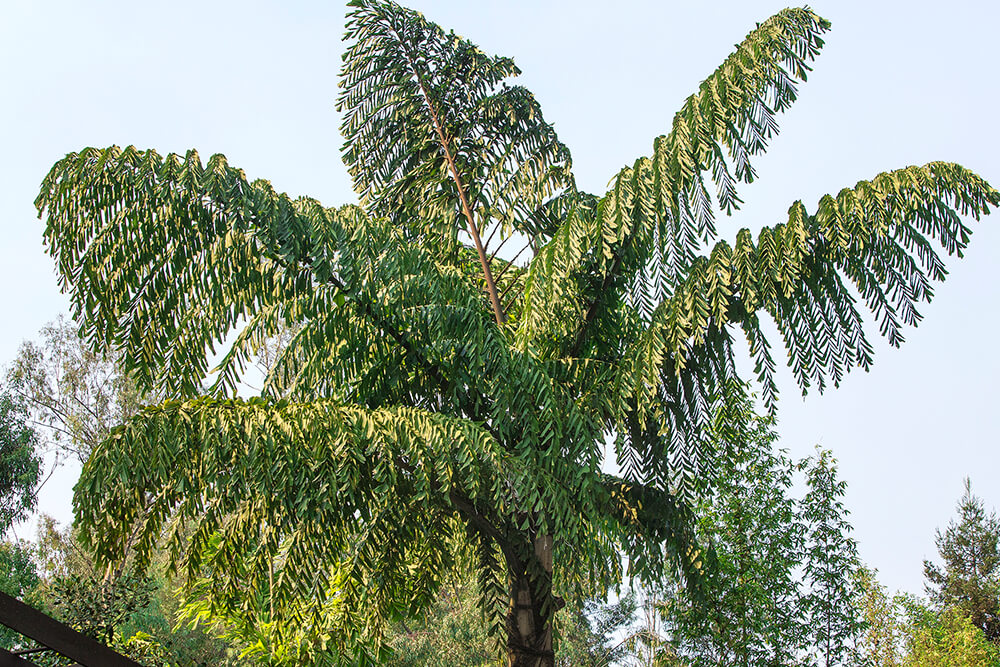
Fish Tail Palm is a unique species of Palm trees, found in the uphill zones of the Eastern and Western Ghats.For thousands of years, the tree has gained notoriety, as it is the source of Fish Tail Toddy, a popular intoxicant in these areas.
However, both the fresh toddy and the fruit of the Palm tree are extremely rich in carbohydrates, flavonoids, alkaloids and terpenoids and Vitamin B Complex.
Much research has gone into studying and understanding the nutritional values of Fish Tail Palm, toddy and fruit extracts.
Known scientifically as Crayola Uren’s, the plant is popularly referred to as ” Jeeliga Chettu,” in Telugu.
The sap extract is also rich and contains all the major and vital minerals. However, neither the fruit nor the sap extract contain any protein.
” Traditionally, the fresh, non fermented sap extract has been consumed as an energy drink, by locals, especially the members of the local Tribal communities.
A lot of research was conducted at the Vellore Institute of Technology over the last thirty years and yet, precious little Nutraceutical, component extraction work has been done, ” Saif, Dr PV Rama Rao , a retired agriculture scientist from the now defunct, Anakapalli agriculture research station.
The Fish Tail Palm has the capacity to be a multi product extract plant and this unique nutraceutical quality of this plant is yet to be exploited by the Nutraceutical industry.
Challa Naga Raju a farmer from Makavaripalem, Mandal, Visakhapatnam District said, ” ours is an region which is extremely agro diverse, we have horticulture, paddy cultivation and S7gR cane farming. Over the last few decades there has been a tremendous rise in paddy cultivation due to canal fed irrigation. Surprisingly we have noticed vast discrepancies on both output as well as quality of yield, probably because adequate soil studies were not conducted before the irrigation projects were taken up.”
Scientists from the Chintapalli agro station mentioned that the rise in irrigation projects has a direct impact on the local agro eco system. They observed that, when rain f3d zones are transformed into canal irrigated zones, the entire eco system changes and this literally means, growing crops, non native to the region, as a result, there is variance in both quality of out put and yield.
Experts believe that there should be a proper survey of soil health across the board, before introducing non native plant species and to improve crop consistency, farmers must invest in soil health and conservation, before anything else.
Image Credit: https://animals.sandiegozoo.org/sites/default/files/2017-08/fishtail-palm-01.jpg